K-pop Generations: From Seo Taiji to Katseye
Start at BTS, rewind to Seo Taiji and Boys in 1992, then ride forward through the groups that reset the game in every generation, back to Katseye today.
This course starts at BTS, rewinds to Seo Taiji and Boys in 1992, then walks forward again to the present. Taking one group from each generation, it traces how K-pop changed its face over time. A beginner course for building a historical frame of K-pop.
- 1
 BTSK-POPグループThe starting point: today's best-known K-pop group raises the question of where this all began.
 - 2
 ソテジワアイドゥルK-POPグループRewinding to 1992, where Seo Taiji and Boys brought rap and social critique into Korean pop and reset the industry.
 - 3
 東方神起K-POPグループAfter Seo Taiji and Boys disbanded, agency-built idol groups took over — TVXQ, from SM, marks that next generation.
 - 4
 BIGBANGK-POPグループBigBang, debuting in 2006 from YG, shows another path — self-production and a driver of the Korean Wave's spread.
 - 5
 少女時代K-POPグループOn the girl-group side at the same time, Girls' Generation earned the title "the nation's girl group" — a parallel track to follow.
 - 6
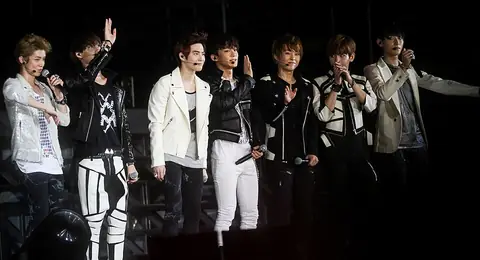 EXOK-POPグループExo, debuting in 2012, shows another SM generational shift and the growing trend of multinational lineups.
 - 7
 TWICEK-POPグループMoving to JYP's Twice to see how the "nation's girl group" lineage continues, shaped through a survival audition show.
 - 8
 BLACKPINKK-POPグループBack to YG with Blackpink, for the "girl crush" concept and a girl group that scaled to global size.
 - 9
 NewJeansK-POPグループNewJeans, from Hybe's ADOR, marks the next generation; the dispute around the group is covered in depth in another course (The HYBE Empire).
 - 10
 KATSEYEK-POPグループThe course ends with Katseye, formed in 2023 — a US-based multinational group showing how the K-pop generational lineage now extends beyond Korea.
関連する論点・特集
次のコース

 深掘り · 10記事The HYBE Empire and Its DisputesHow one group's success became a multi-label company: through the acts of Big Hit, Belift Lab, Source Music and ADOR, the Japan and US labels, to the fan platform Weverse.

 入門 · 10記事Girl Groups Now: 4th and 5th GenerationFrom newcomers Katseye, Babymonster and Illit back to Le Sserafim, NewJeans, Ive, Aespa and I-dle, past the end of Unis, and out to the full list of girl groups.

 深掘り · 10記事How Agencies Make Idols: Big Four, Auditions, PlatformsStart from the fact that Stray Kids belong to JYP: J.Y. Park and Twice, SM and YG, HYBE founded by a former JYP composer, CJ ENM and the Mnet audition that formed Iz*One, and the fan platform Weverse.