ฮันบก
ภาษาอื่น: 한국어 · English · Español · Português · Bahasa Indonesia · 日本語 · Tiếng Việt
 Korea.net · CC BY 2.0 | |
| วัสดุ | หลากหลาย |
|---|---|
| ถิ่นกำเนิด | ประเทศเกาหลี |
| เปิดตัว | อย่างน้อยตั้งแต่สมัยโคกูรยอ |
| ชื่อเกาหลีเหนือ | |
| ฮันกึล | 조선옷 |
| ฮันจา | 朝鮮옷 |
| อาร์อาร์ | joseonot |
| เอ็มอาร์ | chosŏnot |
| ชื่อเกาหลีใต้ | |
| ฮันกึล | 한복 |
| ฮันจา | 韓服 |
| อาร์อาร์ | hanbok |
| เอ็มอาร์ | hanbok |
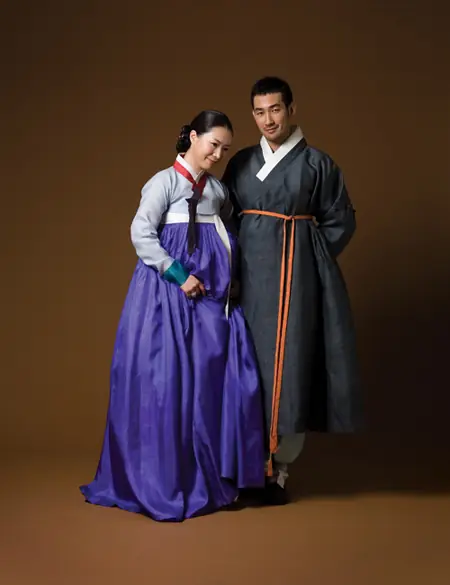
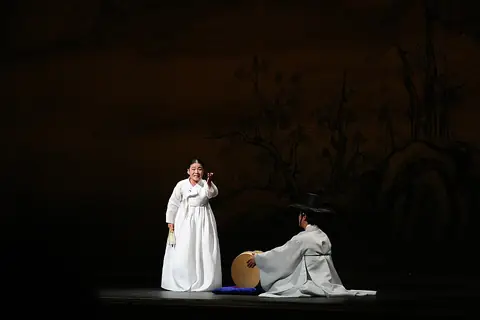
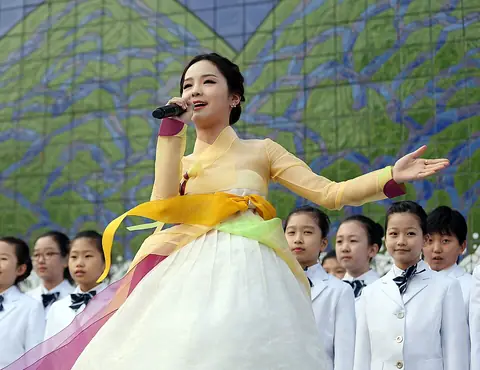
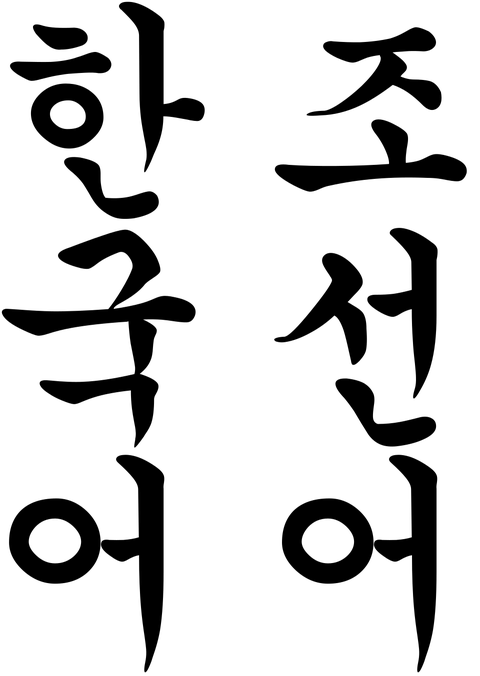
ฮันบก (เกาหลี: 한복; ฮันจา: 韓服; อาร์อาร์: hanbok; แปล เครื่องแต่งกายเกาหลี; ศัพท์ที่ใช้ในเกาหลีใต้) หรือ โชซ็อน-อต (เกาหลี: 조선옷; ฮันจา: 朝鮮옷; อาร์อาร์: Joseon-ot) เป็นเครื่องแต่งกายพื้นเมืองเกาหลี โดยไม่เพียงแค่ชาวเกาหลีใต้และเกาหลีเหนือเท่านั้นที่สวมใส่เครื่องแต่งกายนี้ แต่ยังมีโชซ็อน-จก (เกาหลี-จีน) ชนกลุ่มน้อยในประเทศจีน ที่สวมใส่ด้วย[1][2] ศัพท์ ฮันบก มีความหมายตรงตัวว่า “เครื่องแต่งกายเกาหลี”[3] มีรายละเอียดชุดฮันบกบนฝาผนังสมัยโคกูรยอในเกาหลี[4] เนื่องจากความโดดเดี่ยวระหว่างกันประมาณ 50 ปี ทำให้รูปแบบฮันบกในเกาหลีใต้ เกาหลีเหนือ และโชซ็อน-จก ที่กลุ่มชนเกาหลีจากทั้งสามประเทศสวมใส่ ได้รับการพัฒนาแตกต่างกัน[5][6] นับตั้งแต่คริสต์ทศวรรษ 1990 ชุดแบบเกาหลีใต้กับแบบเกาหลีเหนือดูคล้ายคลึงกันมากขึ้น[7] เช่นเดียวกันกับชุดในประเทศจีน นับตั้งแต่การปฏิรูปเศรษฐกิจจีน มีการแลกเปลี่ยนกันระหว่างทั้งสองเกาหลีมากขึ้น นำไปสู่ทั้งการพัฒนาและการเปลี่ยนแปลงโชซ็อน-อตแบบโชซ็อน-จกในประเทศจีน[8] โชซ็อน-อตแบบโชซ็อน-จกบางรูปแบบได้รับอิทธิพลและแรงบันดาลใจจากแบบฮันบกทั้งเกาหลีใต้และเกาหลีเหนือ[5]
ภาพฮันบกยุคแรกสุดสามารถสืบได้ถึงสมัยสามราชอาณาจักรเกาหลี (57 ปีก่อน ค.ศ. ถึง ค.ศ. 668) โดยมีต้นตอจากกลุ่มชนเกาหลีดั้งเดิมในบริเวณที่ปัจจุบันคือเกาหลีตอนเหนือและแมนจูเรีย ชุดนี้ยังพบในงานศิลปะที่ภาพจิตรกรรมฝาผนังสุสานอาณาจักรโคกูรยอในคริสต์ศตวรรษที่ 4 ถึง 6[4] โดยที่โครงสร้างพื้นฐานของฮันบกจักตั้งขึ้นตั้งแต่ช่วงเวลานี้เป็นต้นไปเป็นอย่างน้อย ฮันบกสมัยโบราณประกอบด้วย ชอโกรี}} (เสื้อ), พาจิ (กางเกง), ชิมา (กระโปรง) และ po (เสื้อคลุม) โครงสร้างหลักของฮันบกได้รับการออกแบบให้มีความสะดวกต่อการเคลื่อนย้าย และผสมผสานหลายแม่ลายของลัทธิมู[9] คุณสมบัติโครงสร้างพื้นฐานฮันบกเหล่านี้ยังคงไม่เปลี่ยนแปลงจนถึงปัจจุบัน อย่างไรก็ตาม ฮันบกที่มีการสวมใส่ในปัจจุบัน มีลวดลายจากฮันบกในสมัยราชวงศ์โชซ็อน[9] โดยเฉพาะชุดที่ชนชั้นสูงและเชื้อพระวงศ์สวมใส่[10][11] อย่างไรก็ตาม ในอดีต สามัญชน (seomin) ไม่ได้รับอนุญาตให้สวมสิ่งที่ปัจจุบันรู้จักกันในฐานะฮันบก และสวมได้เฉพาะมินบก (เครื่องแต่งกายสามัญชน) ซึ่งโดยทั่วไปจะมีสีขาวหรือสีขาวนวล สามัญชนสามารถสวมชุดฮันบกได้เฉพาะในวันแต่งงานและในโอกาสพิเศษต่าง ๆ[10][11][12] การใช้เสื้อผ้าสีขาวอย่างกว้างขวางในหมู่คนทั่วไปทำให้เกาหลีได้รับการกล่าวขานเป็น "คนนุ่งห่มขาว"[12] ปัจจุบัน ชาวเกาหลีสมัยใหม่สวมฮันบกในโอกาสและเหตุการณ์ที่เป็นทางการหรือกึ่งทางการ เช่น งานแต่งงาน เทศกาล งานเฉลิมฉลอง และงานพิธีต่าง ๆ ใน ค.ศ. 1996 รัฐมนตรีว่าการกระทรวงวัฒนธรรม กีฬา และการท่องเที่ยวของเกาหลีใต้ จัดตั้ง "วันฮันบก" ขึ่้น เพื่อส่งเสริมให้พลเมืองเกาหลีใต้สวมฮันบก[13]
1. การใช้งานในสมัยใหม่
1.1. เกาหลีใต้
1.2. เกาหลีเหนือ
ชุดฮันบก ของสตรีในเกาหลีเหนือนั้น ชุดจะเป็นสีเดียวกันทั้งชุด ทั้งท่อนบน และท่อนล่าง ปกเสื้อจะมีขนาดเล็กกว่า คอลึกกว่า ชุดฮันบกในเกาหลีใต้ ส่วนชุดฮันบกของบุรุษนั้นในงานพิธีการต่าง ๆ จะใส่ชุดสูทสากลแทน
2. ข้อมูล
ข่าวที่เกี่ยวข้อง
ต้นฉบับ 문화체육관광부 — 일본 도쿄 한복판에서 만난 '케이-일상', '케이데이' 성료 ↗
K-Day event in Tokyo draws 16,000 visitors
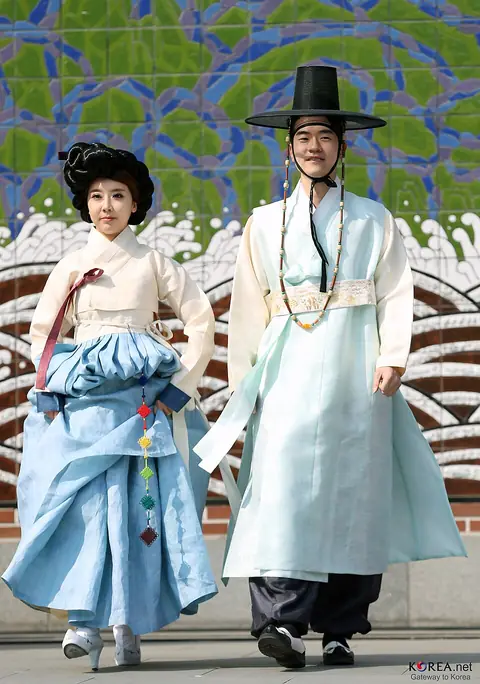
The Ministry of Culture, Sports and Tourism, together with the Korean Foundation for International Cultural Exchange and the Korea Craft and Design Foundation, held the convergence "K-culture" event K-Day at Omotesando Hills in Tokyo on Oct. 17-18, drawing about 16,000 visitors. Centered on design Hanbok, it introduced "K-lifestyle" across food, beauty and fashion, including a Hanbok fashion show with six brands and 23 hands-on workshop sessions. It was the event's second edition after the first was held in Bangkok, Thailand in May, and SHINee's Onew took part wearing Hanbok on the second day.
ทำไมจึงสำคัญ A preliminary event also ran Oct. 14-16, and all workshop sessions sold out as soon as registration opened.
ต้นฉบับ Korea.net Culture · Lee Dasom — Hanbok Culture Week to host events at 410 venues at home, abroad ↗
Hanbok Culture Week, now in 9th year, spans about 410 sites
The culture ministry and the Korea Craft and Design Foundation are jointly organising the ninth Hanbok Culture Week, which runs Oct. 19 to 25. Exhibitions, hands-on activities and performances are planned at roughly 410 sites in Korea and overseas, among them a national museum and a Seoul royal palace. Visitors dressed in Hanbok get admission discounts, including 50% at Lotte World and 35% at Seoul Sky.
ทำไมจึงสำคัญ The annual event promotes Hanbok, Korean traditional clothing, and this ninth edition also includes programmes abroad in countries such as Canada, Japan and Denmark.
ฮันบกสรุปโดย AI (Claude) · บรรณาธิการตรวจแล้ว
เส้นทางที่ผ่านบทความนี้
อ่านต่อ
เลือกจากลิงก์ในบทความ ประเด็นร่วม และหมวดเดียวกัน · สุ่มบทความ →


เชิงอรรถ
- ↑ Zang, Yingchun (2007). Zhongguo shao shu min zu fu shi. 臧迎春. (พิมพ์ครั้งที่ Di 1 ban). Beijing: Wu zhou chuan bo chu ban she. ISBN 978-7-5085-0379-0. OCLC 57675221.
- ↑ "| Minority Ethnic Clothing : Korean (Chaoxianzu) Clothing". baoku.gmu.edu. ข้อมูลเก่าจากต้นฉบับ เมื่อ 2022-10-27. สืบค้นเมื่อ 2022-08-23.
- ↑ Korean Culture and Information Service, 2018, Ministry of Culture, Sports and Tourism of the Republic of Korea
- ↑ The Dreams of the Living and the Hopes of the Dead-Goguryeo Tomb Murals, 2007, Ho-Tae Jeon, Seoul National University Press
- ↑ Women entrepreneurs : inspiring stories from emerging economies and developing countries. Mauro F. Guillén. New York: Routledge. 2014. ISBN 978-1-136-32459-8. OCLC 857463468.
{{cite book}}: CS1 maint: others (ลิงก์) - ↑ Lin, Huishun (2020). "A study on the Alteration of traditional costume of Korean Chinese (I) - Focused on the daily wear" 중국 조선족 전통복식의 변화연구 (I) - 일상복을 중심으로 -. 한국의상디자인학회지 (ภาษาเกาหลี). 22 (4): 63–78.
- ↑ Chang, In-Woo (2006). "Change in Hanbok of South and North Korea after the Division and the Interexchange -Focusing on Women's Jeogori-". Journal of the Korean Society of Clothing and Textiles. 30 (1): 106–114. ISSN 1225-1151.
- ↑ Jin, Wenlian (2020). Chaoxianzu's Traditions of Dress: An Exploration of Identity Within Contemporary Fashion Contexts (วิทยานิพนธ์) (ภาษาอังกฤษ). Auckland University of Technology.
- ↑ Flags, color, and the legal narrative : public memory, identity, and critique. Anne Wagner, Sarah Marusek. Cham, Switzerland: Springer. 2021. น. 125. ISBN 978-3-030-32865-8. OCLC 1253353500.
{{cite book}}: CS1 maint: others (ลิงก์) - ↑ Passport to Korean culture. Haeoe Hongbowŏn (พิมพ์ครั้งที่ 2009). Seoul, Korea: Korean Culture and Information Service. 2009. ISBN 978-89-7375-153-2. OCLC 680802927.
{{cite book}}: CS1 maint: others (ลิงก์) - ↑ Gwak, Sung Youn Sonya (2006). Be(com)ing Korean in the United States: Exploring Ethnic Identity Formation Through Cultural Practices. Cambria Press. ISBN 9781621969723.
- ↑ Lopez Velazquez, Laura (2021). "Hanbok during the Goryeo and Joseon dynasty". www.korea.net. สืบค้นเมื่อ 2022-08-21.
- ↑ 쿠키뉴스 (2014-09-15). "한복데이, 전국 5개 도시서 펼쳐진다". 쿠키뉴스 (ภาษาเกาหลี). สืบค้นเมื่อ 2022-03-11.
อ้างอิงหน้านี้
คัดลอกบรรทัดด้านล่างเพื่ออ้างอิง
“ฮันบก.” Hallyu Wiki. https://hallyu.wiki/th/wiki/hanbok/ (เข้าถึงเมื่อ 2026-11-28).
บทความนี้อ้างอิงจากบทความวิกิพีเดีย «ฮันบก» ภายใต้สัญญาอนุญาต CC BY-SA 4.0 ดูรายชื่อผู้เขียนได้ที่ประวัติการแก้ไข เครดิตภาพอยู่ใต้ภาพแต่ละภาพ