K-pop generations: where sources agree, and where they split
How 15 press, critical and academic sources divide K-pop into generations one to five — side by side.
A K-pop "generation" is not an official category. The term grew out of agency marketing, journalists' shorthand and fan habit, so its boundaries shift from source to source. This explainer does not pick one answer; it shows, sentence by sentence and with source numbers, where sources say the same thing and where they part ways.
Broadly settled are the first three generations (Yonhap wrote that this split is not seriously disputed). When the fourth generation began, and whether a fifth exists at all, remain open as of 2026.
| Generation | Rough period | Groups often cited | What sources say defines it |
|---|---|---|---|
| 1st generation | Debuts from the mid-to-late 1990s, active into the early 2000s. Sources agree on H.O.T.'s 1996 debut as the starting point but split on whether the era ends in the early or mid-2000s. | H.O.T., S.E.S., Sechs Kies, Fin.K.L, Shinhwa, g.o.d, Baby V.O.X | Yonhap, the Hankook Ilbo and The Korea Herald describe the first generation as the moment large agencies locked in a trainee-to-debut system and set off the first domestic teen-idol boom. The JoongAng Ilbo (2010) says that from the mid-1990s “idol” came to mean a singer who trained at an agency from their teens, with H.O.T.’s camp-style production as the start. The Korea Herald credits this era with fan-club names, colors and chants; Top Class adds PC-communication fandom and a dance-pop base mixed with hip-hop, R&B and ballads.1,2,5,7,14,15 |
| 2nd generation | Debuts from the mid-2000s into the early 2010s. Many pieces use TVXQ's debut as the marker, but date it to either 2003 or 2004. | TVXQ, BigBang, Wonder Girls, Girls' Generation, KARA, Shinee, SS501, Super Junior, 2NE1, 2PM | The Hankook Ilbo and The Korea Herald treat the second generation as the layer that built the “K-pop” brand and the first real base for work abroad. Under the SM–JYP–YG lineup the main markets were Japan, China and Southeast Asia; the United States, Australia and Canada stayed marginal, the Herald says. Top Class adds promotion on the internet, blogs and YouTube, plus members working in acting and variety shows.1,2,3,4,5,7,8 |
| 3rd generation | Debuts around 2012 into the late 2010s. Major dailies largely agree on EXO (2012) and BTS (2013) as the start; they differ on the end year and on where late-2010s boy groups belong. | Exo, BTS, Twice, Blackpink, Red Velvet, Seventeen, NCT | Yonhap describes this cohort as groups loved across Asia and then worldwide, and says the broad split among the first three generations is not seriously disputed. The Korea Herald says the third generation promoted itself first through social media and YouTube rather than traditional media alone, with BTS reaching a level of chart and arena dominance many had not imagined for a K-pop group. The Hankook Ilbo (2022), on girl groups, says a wider range of sounds and thicker fandoms carried the scene from a domestic trend into both home and overseas markets.1,2,4,5,6,7 |
| 4th generation | No agreed start year. For girl groups, aespa's 2020 debut is often cited; some pieces that include boy groups reach back to 2018. In June 2024 The Korea Herald wrote that industry consensus still placed the present in the fourth generation. | Aespa, Ive, NewJeans, Le Sserafim, Itzy, STAYC | The names most often grouped together are aespa, IVE, NewJeans and LE SSERAFIM. The Hankyoreh treats aespa’s KWANGYA avatar world as an extension of girl-crush styling and as the opening of the fourth-generation girl-group era, and sets NewJeans against that with a retro high-teen concept and simpler melodies and no lore. The Korea Herald says these acts became global on debut, whereas third-generation acts needed four or five years; the Hankook Ilbo (2023) points to girl-group dominance and self-assertive, solidarity-minded “growth” lyrics.1,2,4,5,6,7,8,9 |
| 5th generation | Not an established period. Since about 2023, more promotion and coverage has called new acts "fifth generation", but in 2024 sources still described the fourth generation as current, and some called this a "4.5" transition. | Zerobaseone, Riize, Illit, TWS, Kiss of Life, Babymonster | People who use the label point to debuts after in-person events resumed, and to a lighter, fresher, easy-listening sound, according to an agency source quoted by Yonhap. The Hankook Ilbo (2024) notes attempts such as RIIZE’s “emotional pop” and TWS’s “boyhood pop,” but says easy listening was already common among fourth-generation acts, so it is a weak divider. A 2026 KCI paper argues a real break between a fourth-generation model of remote, tech-fantasy storytelling and first-week sales, and a fifth-generation endemic model of hybrid offline contact, realistic growth stories, localized launches, and broader merch and licensing.1,2,3,5,7,8,11,12 |
Before the first generation: where Seo Taiji and Boys fit
The JoongAng Ilbo (2010) says the music industry generally treats the mid-1990s as the first page of Korean idol history. Idols existed earlier — Sobangcha drew teen fans in the 1980s, and early-1990s Seo Taiji and Boys were called “president of the teens” — but after H.O.T. the word came to mean a singer produced through agency training. Billboard (2013) stresses a different layer: after Seo Taiji and Boys’ 1992 debut, companies copied the style; many observers mark that debut as the genesis of K-pop, while H.O.T. and Sechs Kies are described separately as the following “first generation of idol groups.”
10,14What people use to draw the lines
- Debut year. Yonhap cuts the first generation as “mainly late-1990s debuts,” the second as “mainly mid-2000s debuts,” and the third as “debuts from 2012.” IZE reads those years against an agency flagship cycle of about four to seven years, overlapping the seven-year statutory contract maximum. The Hankook Ilbo (2023) still says there is no clear standard, so the handover timing stays fluid.1,2,8
- Market reach. The Hankook Ilbo (2023 and 2024) summarizes generation 1 as the first domestic idol boom, 2 as the overseas base under SM, JYP and YG, 3 as the change in K-pop’s status abroad, and 4 as global from the debut stage. The Korea Herald specifies a mostly local first-generation audience, a mainly Asian second generation, worldwide consolidation in the third, and instant global stars in the fourth. Ten Asia counters that overseas pushes began with the first generation, so market expansion alone cannot divide the generations.2,3,5,9
- Media and fandom tools. Top Class lines up PC communication and fan clubs (1), blogs and YouTube (2), Twitter, Instagram and V LIVE (3), TikTok and other short video (4), and Weverse and Bubble in its fifth-generation section. The Korea Herald locates the third generation’s break in using social media and YouTube as the primary promotion channel. Ten Asia contrasts one-way concert and fan-meeting contact with two-way contact on Weverse, Bubble and Universe after BTS.5,7,9
- A break in concept, narrative or technology. Ten Asia and the Hankyoreh treat aespa’s AI avatars and metaverse lore as the attempt to separate fourth-generation practice from third-generation communication. The Hankook Ilbo (2024) doubts that fifth-generation easy listening and bespoke genre names are actually distinct from the fourth. A 2026 KCI paper proposes dropping bare chronology for three layers — sociocultural context, concept and narrative strategy, and marketing and global strategy — and contrasts remote fantasy plus first-week sales with endemic-era hybrid offline contact and realistic growth stories.3,6,9,12
- Whether COVID-19 is the border. An agency source promoting a fifth generation told Yonhap that fourth-generation groups debuted into the pandemic, while their own groups debuted once in-person events were possible again. The 2024 KCI paper by Song and Seo, in its abstract, says generations should be read against social, cultural and economic context and technological change; it does not fix COVID as the cut. The Hankook Ilbo and critic Kim Do-heon warn against turning that kind of external event straight into a generation name.1,2,12,13
Where sources disagree
- Whether a fifth generation has actually begun. Yonhap (2024) sets the post-endemic case for a new cohort against the view that splitting NewJeans and LE SSERAFIM off after only two years is pointless. Critic Kim Do-heon says generation talk has slid from a sorting convenience into marketing language. The Hankook Ilbo (2024) reports both the “still 4.5” view and the reading that agencies use “first fifth-generation” tags to escape sales comparisons. NME says only that some people date the fifth generation from ZEROBASEONE.1,2,3,11
- Where the fourth generation starts: 2018 boy groups, or the 2020 girl-group/COVID cluster. Top Class dates it from 2018 and includes Stray Kids, ITZY, TOMORROW X TOGETHER and ENHYPEN. Hankyoreh, Yonhap and the Hankook Ilbo’s girl-group coverage date the opening to aespa (2020) and debuts around then. In 2021 Ten Asia recorded the objection that a fourth generation could not exist while BTS still held the top, then argued that a generation shift can no longer mean the previous generation fading.1,4,6,7,9
- Whether NCT is third- or fourth-generation. Yonhap (2024) places EXO, BTS, TWICE and NCT in the third generation (debuts from 2012) and asks how a fifth generation can be declared while SEVENTEEN, NCT and TWICE are still active. IZE (2025), using only SM’s flagship handovers, calls EXO (2012) the start of the third, NCT (2016) the fourth, and RIIZE (2023) the fifth.1,8
- In the articles opened here, BTS is consistently third-generation, not second. The split is whether BTS is only third-generation or also the start of fourth-generation communication. Ten Asia (2021) calls BTS “both third and fourth,” crediting Weverse, YouTube and self-produced content with two-way contact, and draws the line between 3 and 4 at aespa’s AI and metaverse world. Yonhap, the Herald and the Hankook Ilbo list BTS only as a third-generation representative.1,2,5,9
- Whether a “2.5 generation” sits between the second and the third. Only the Hankook Ilbo’s 2022 girl-group genealogy uses that label, for Girl's Day, SISTAR, SECRET, AOA, Apink and After School. Yonhap’s “little disagreement” map of generations 1–3, and the Herald’s account, do not use it.1,4,5
- The same group is filed under two generations inside a single outlet. Top Class (2025) puts ZEROBASEONE on its fourth-generation list, flagged as debatable, and again on its early fifth-generation list. Stray Kids appears on both the third- and fourth-generation lists, with a note that some call the group 3.5; (G)I-DLE is also described as late third-generation. A 2026 KCI paper reports that highly involved listeners themselves experience the boundary as blurry, mixing industry marketing with a structural shift.7,12
How to read this page
The "groups often cited" column is not an official roster; it lists names the sources use as examples, and the same group can sit in two generations depending on the source (see above). Group names link to Hallyu Wiki articles where one exists.
To read the generations as a story, the reading path "K-pop Generations" links ten articles from Seo Taiji and Boys to KATSEYE.
Reading paths


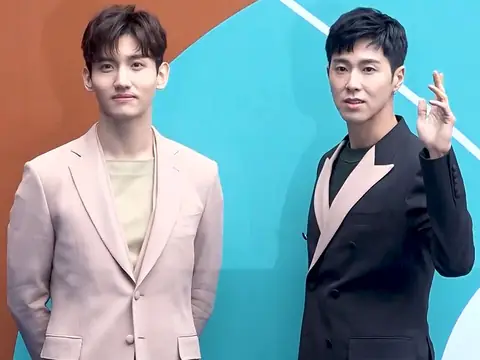 Starter · 10 articlesK-pop Generations: From Seo Taiji to KatseyeStart at BTS, rewind to Seo Taiji and Boys in 1992, then ride forward through the groups that reset the game in every generation, back to Katseye today.

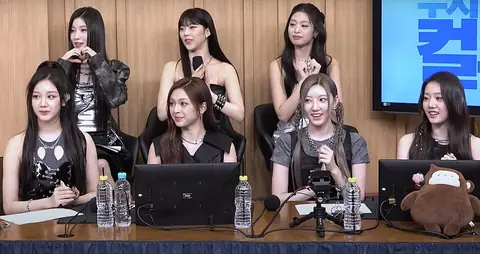
 Starter · 10 articlesGirl Groups Now: 4th and 5th GenerationFrom newcomers Katseye, Babymonster and Illit back to Le Sserafim, NewJeans, Ive, Aespa and I-dle, past the end of Unis, and out to the full list of girl groups.
Related articles
K-pop Seo Taiji and Boys TVXQ BigBang Girls' Generation Exo BTS Twice Blackpink Aespa NewJeans Riize Illit Katseye
Sources
- press 연합뉴스, 4세대 뉴진스가 2년 됐는데…벌써 5세대 아이돌 시대?, 2024-06-10
- press 한국일보, "벌써 5세대?" 아이돌 세대 교체, 기준이 뭘까, 2023-07-13
- press 한국일보, 너도 나도 5세대...가파른 K팝 세대 교체, 우려점은 없나, 2024-04-09
- press 한국일보, [HI★초점] K팝 걸그룹 세대교체, 저무는 3세대, 2022-05-20
- press The Korea Herald, K-pop generations, 2024-06-12
- press 한겨레, ‘걸그룹 대전’의 명암, 2023-05-28
- press 톱클래스 (조선일보), k-pop의 세대별 분류와 흐름 및 특징, 2025-07-10
- industry 아이즈(ize), 세대교체 주기 빨라지는 K-POP...IP가 경쟁력이다 [IZE 진단], 2025-05-30
- press 텐아시아, 4세대 아이돌이 뭔데? 에스파·JYP·하이브로 논란 종결 [TEN스타필드], 2021-10-18
- press Billboard, The Root of K-Pop: The Influences of Today's Biggest Acts, 2013-08-06
- press NME, ZEROBASEONE on being the first fifth generation K-pop group, 2023-08-16
- academic 콘텐츠와산업 (한국콘텐츠산업학회, KCI), K-POP 4·5세대 아이돌의 세대 구분과 마케팅 전략에 관한 혼합연구, 2026
- academic 한국엔터테인먼트산업학회논문지 (KCI), 변증법적 발전 과정으로 바라보는 K-POP 아이돌 트렌드 변화 과정 -1세대부터 4세대 아이돌을 중심으로-, 2024
- press 중앙일보, ‘아이돌 한국사’ 첫 페이지에는 90년대 중반 ‘기획상품’ H.O.T, 2010-07-14
- press 동아일보 (스포츠동아), [다시 뜨는 ‘1세대 아이돌’②] 왜 다시 1세대 아이돌일까?, 2019-08-14
Cite this page
“K-pop generations: where sources agree, and where they split.” Hallyu Wiki. https://hallyu.wiki/en/guides/kpop-generations/ (Retrieved 2026-10-10).
How this article was made: read official statements, court/regulator records and at least two independent outlets; community posts are used only as attention signals. Written by Hallyu Wiki editors with AI assistance — check the sources. Request a correction